May 16, 2026 • Dale Kosmicki • 10 min reading time • Prices verified May 24, 2026
Metabo Angle Grinders and Bench Grinders: Made-in-Germany Build Quality Meets American Shop Duty-Cycle Demands
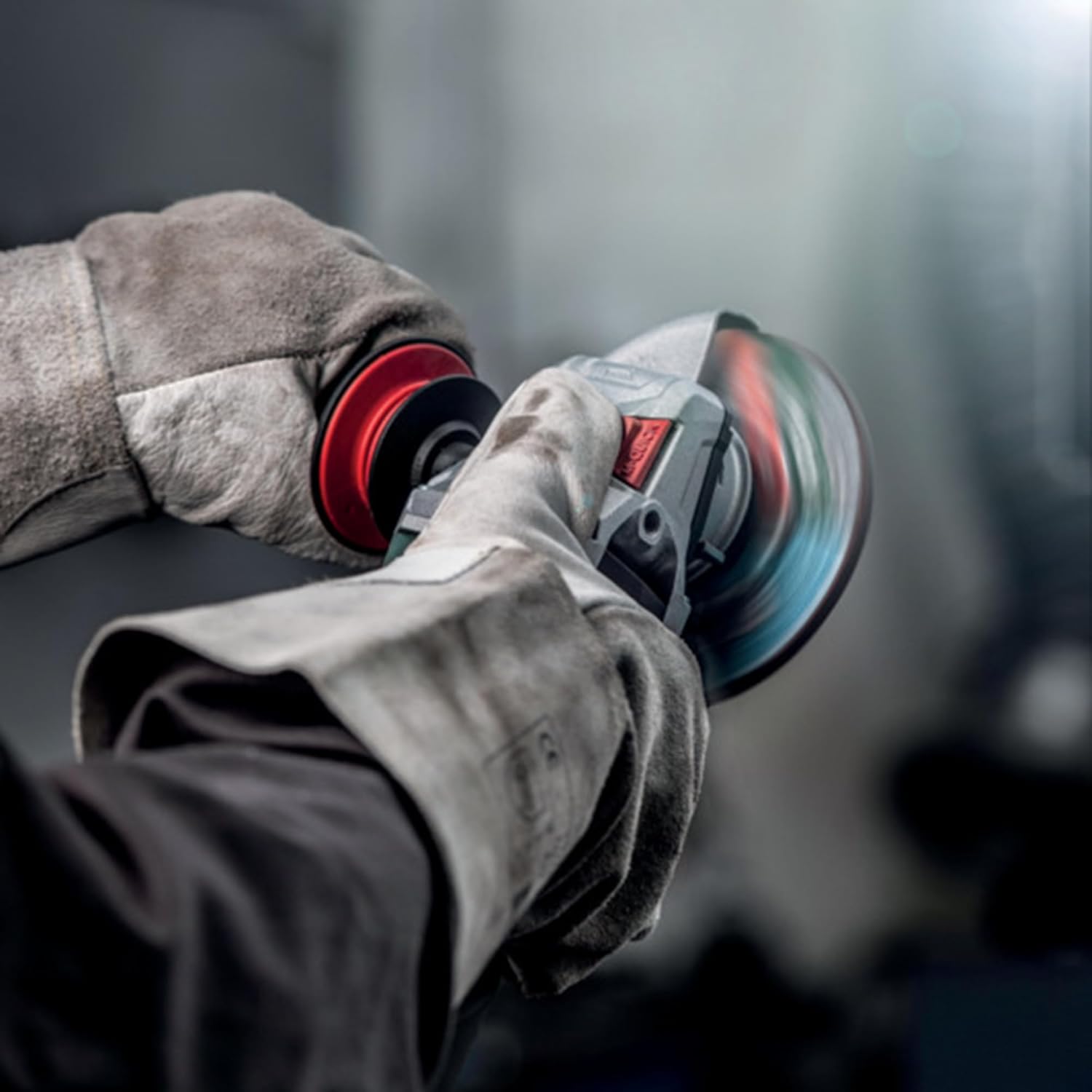
If you run a metal fabrication shop, a welding cell, or a grinding station, you’ve almost certainly used an angle grinder — a handheld power tool with a spinning abrasive disc that cuts, grinds, or finishes metal. You’ve probably used a bench grinder too: the two-wheeled stationary unit bolted to a workbench for sharpening drill bits, cleaning welds, or deburring castings. Both are workhorses. The question that actually matters for someone equipping a shop isn’t “should I buy one?” — it’s “which brand holds up under the punishment I’m going to dish out, and at what total cost?” This article answers that specifically for Metabo, the German power tool brand with a serious following in industrial shops. By the end, you’ll know where Metabo earns its premium over cheaper alternatives, where you’re paying for features you might not need, and how to match the right tool to your actual production demands.
| EDITOR'S PICKMetabo US606467800 Concrete Ren… | Mid-tierMakita 9557PBX1 4-1/2" Paddle S… | Budget pickDEWALT Angle Grinder | |
|---|---|---|---|
| Motor | — | — | 11 Amp |
| RPM | — | — | 11,000 |
| Disc size | 7" | 4-1/2" | 4.5" |
| Switch type | — | Paddle | Paddle |
| Case included | — | ✓ | ✗ |
| Price | $509.00 | $109.00 | $94.00 |
| See on Amazon → | See on Amazon → | See on Amazon → |
Who Metabo Is — and Why It’s Not Just Marketing Speak
Metabo was founded in Nürtingen, Germany in 1924, and unlike many “German-engineered” brands that quietly shifted production to lower-cost regions, Metabo still manufactures a significant portion of its professional-grade line in Germany. That origin story matters beyond brand pride: German tool manufacturing tends to operate under tighter component tolerance standards, and Metabo’s motor windings, gearbox housings, and internal electronics reflect that. The practical result is a tool rated for higher duty cycles — the percentage of time a motor can run continuously before needing to cool — than most comparably priced American or Asian competitors.
For a context check: duty cycle is expressed as a percentage over a 10-minute window. A tool rated 60% duty cycle can run hard for 6 minutes, then needs 4 minutes of rest before the next sustained pass. A professional fabrication shop running near-continuous grinding pushes cheap tools well past their limits. Overheated motors fail. Failed tools mean downtime. Downtime costs more than the tool did. That math is the whole reason Metabo has a loyal base in production environments.
Metabo also deserves credit for being one of the few brands that treats OSHA 1910.215 and ANSI B7.1 compliance as engineering inputs rather than afterthoughts. Guard design, spindle lock geometry, and maximum operating RPM markings on their tools are consistent with what OSHA and ANSI require — something that matters if you’re ever subject to a compliance inspection or have a recordable incident.
Angle Grinders: Where Metabo’s Lineup Actually Lives
Metabo’s angle grinder range runs from roughly $89 for a basic 4.5-inch corded unit to over $500 for a brushless 7-inch variable-speed model with a built-in overload cutoff. Pricing shifts with distributor and model year; always confirm current street pricing directly with your industrial supplier or through Metabo’s authorized distributor network. Here’s how to read the lineup without getting lost in model numbers.
Disc Size Drives the Decision First
- 4.5-inch / 5-inch: Weld prep, deburring, rust removal, light stock removal. Most common in welding cells. Discs are cheap, widely available, and easy to swap.
- 6-inch: The awkward middle child — more material removal than 4.5, but discs are less commodity-priced and the tool is heavier. Fewer shops run this size.
- 7-inch / 9-inch: Foundry work, heavy weld seam removal, large-surface finishing. These tools weigh 8–12 lbs and require two-hand operation. Floor-level ergonomics become a real fatigue factor on long shifts.
For most welding prep and light fabrication, a 4.5-inch or 5-inch unit is the right call. The disc cost-per-cut math strongly favors the smaller size: a premium 4.5-inch flap disc typically runs $3–$6, while a 7-inch equivalent runs $12–$18, and the cut volume per disc hour doesn’t scale proportionally. Verify specific disc pricing with your consumables supplier, as costs vary by abrasive grade and manufacturer.
Corded vs. Brushless Cordless
Metabo’s cordless lineup runs on their 18V and 36V (dual-18V) LiHD battery platform. The honest trade-off here: a 36V brushless Metabo angle grinder in a genuine production environment will run approximately 45–60 minutes of actual grinding time per battery charge under moderate load. If your operators are doing sustained heavy stock removal — think weld seam grinding on structural steel — you’ll need to budget for at least two batteries per tool and a charging strategy. That’s not a knock on Metabo; it’s physics. The freedom from a cord genuinely matters in large structural fabrication bays or pipeline work where cord management is a real hazard.
For a bench-anchored station doing repetitive weld cleanup, corded is still the economically sensible answer. Less battery rotation, less overhead, no charge discipline required.
Representative specs from Metabo’s published product documentation:
- Metabo corded 4.5” angle grinder (W 9-115 class): 8.5A motor, approximately 11,000 RPM no-load
- Metabo brushless cordless 5” (18V LTX BL class): approximately 8,500 RPM no-load; runtime varies with load and battery capacity
- Metabo 36V brushless 7” (Marathoner class): approximately 6,600 RPM no-load
Confirm current model availability and exact specifications through Metabo Corporation’s product specification sheets or an authorized distributor before purchasing.
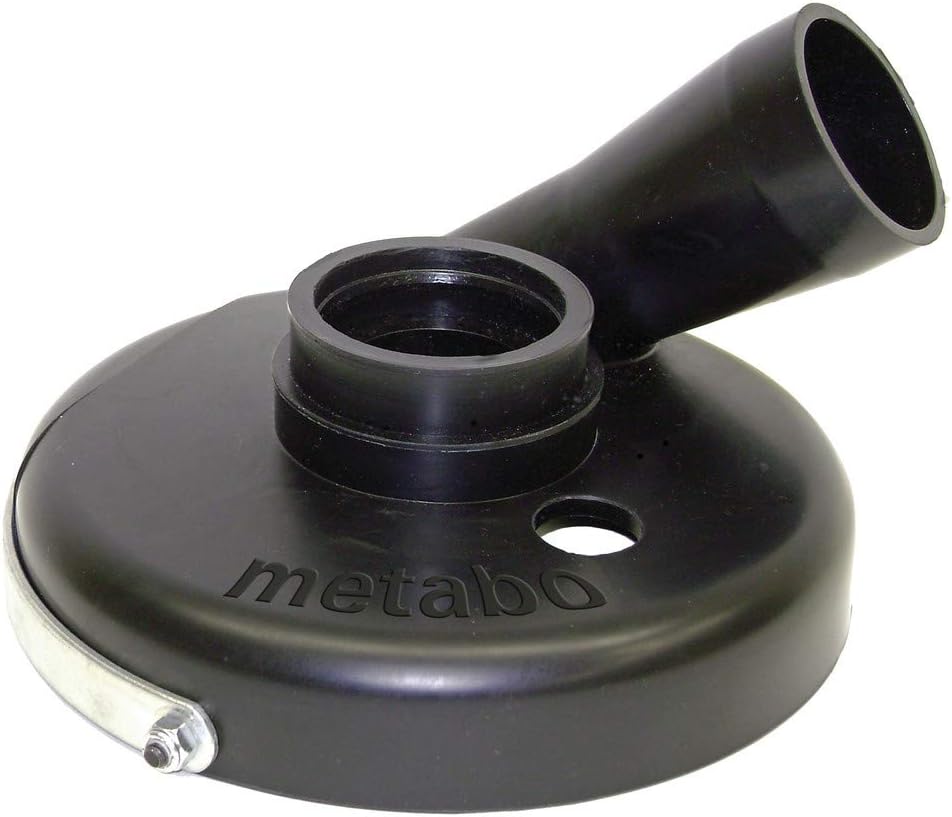
Metabo
$509.00
In stock on Amazon
Check price on AmazonFor shops outfitting a full welding crew and looking to standardize on one platform, the mid-tier corded 4.5-inch lineup is where Metabo’s value proposition is clearest — the build quality is measurably better than the budget tier, and the price delta is easy to justify on total uptime.
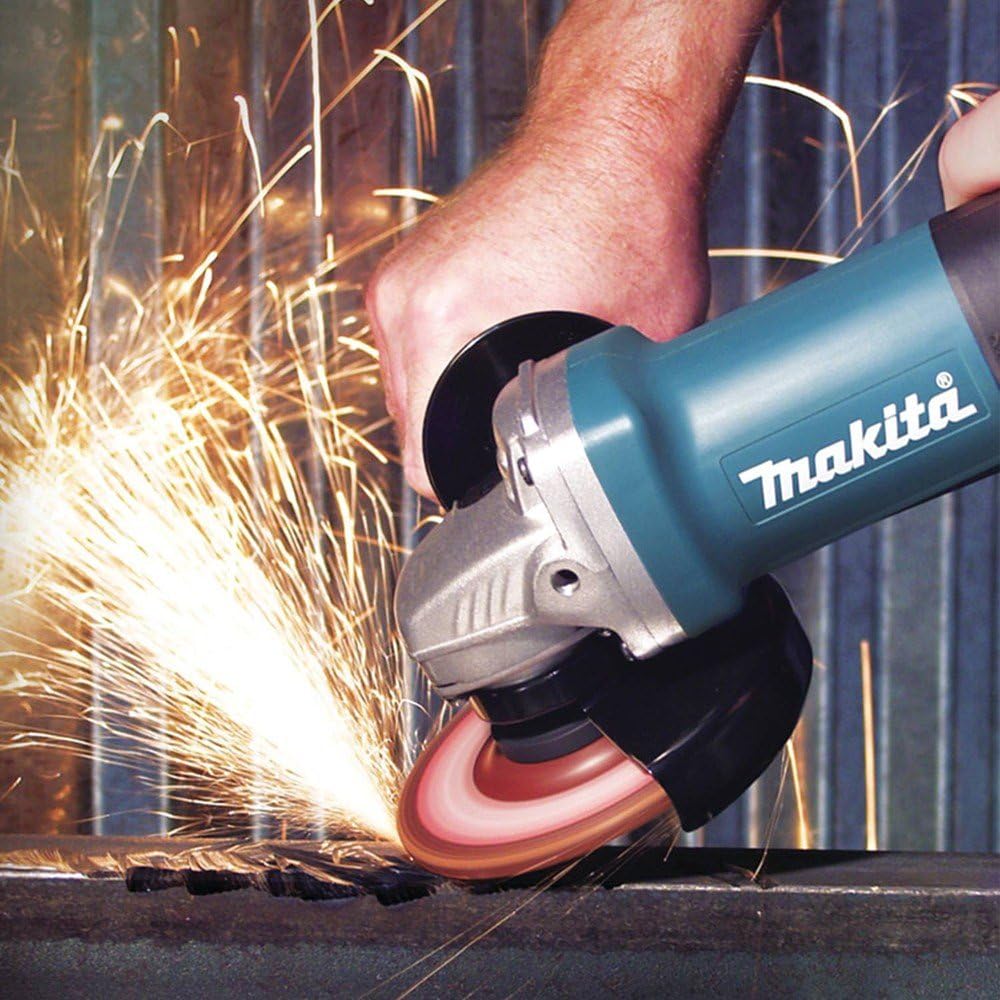
Makita
$109.00
In stock on Amazon
Check price on AmazonIf budget is the primary constraint and the application is genuinely occasional — a job shop doing incidental grinding a few hours per week — there’s no shame in acknowledging that Metabo’s durability premium isn’t fully monetizable under light use.
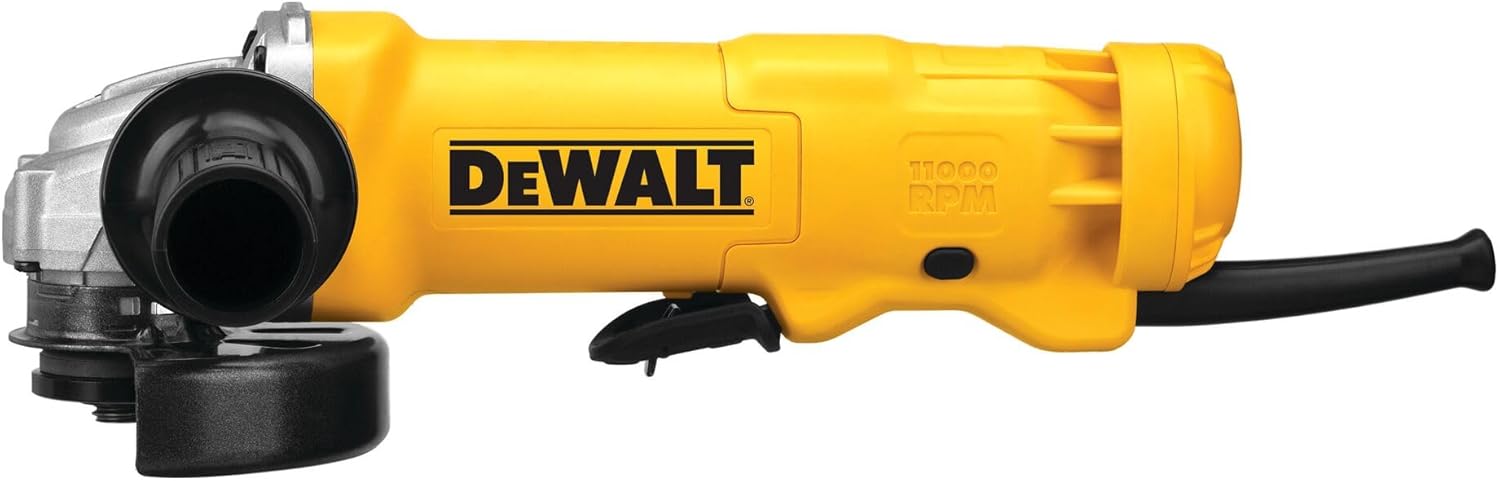
DEWALT DWE402
$94.00
In stock on Amazon
Check price on AmazonBench Grinders: The Case for Metabo’s Stationary Line
Metabo’s bench grinder offering in the US market is more focused than their angle grinder portfolio — they concentrate on the 6-inch and 8-inch wheel size segments rather than trying to cover every configuration. That’s actually appropriate given their target customer.
What Sets a Metabo Bench Grinder Apart
The two things that separate a Metabo bench grinder from a $79 import unit in a production environment are motor construction and wheel guard compliance.
On the motor: Metabo bench grinders use wound-rotor induction motors rather than the universal motors found in lower-cost tools. Wound-rotor induction motors run cooler, quieter, and more consistently under load — important when your operator is dressing tool steel or grinding HSS drill bits for extended periods. They also last longer. A universal motor in a cheap bench grinder is often the first thing to fail under daily shop use.
On the guards: ANSI B7.1 — Safety Requirements for the Use, Care, and Protection of Abrasive Wheels, published by the American National Standards Institute — which OSHA 1910.215 references directly, requires that bench grinder tool rests maintain a maximum 1/8-inch gap from the wheel face, and that guards expose no more than 65 degrees of wheel arc on bench-mounted units. Metabo’s guards ship configured to those specifications. Many import bench grinders ship with adjustable rests that drift out of compliance within a few months of use. This isn’t a minor compliance checkbox — a wheel failure at 3,450 RPM is a serious injury event. The OSHA standard exists because wheel failures kill people.
Metabo
$509.00
In stock on Amazon
Check price on Amazon6-Inch vs. 8-Inch: The Practical Cut
6-inch: Right for tool sharpening, light deburring, and occasional HSS tool grinding. Fits on a standard workbench without consuming real estate. Street pricing for Metabo’s 6-inch bench grinder units varies by distributor and current model availability; confirm directly with your preferred industrial supplier.
8-inch: Step up when you’re grinding larger tooling, doing significant stock removal on castings or forgings, or running the machine multiple hours per day. The larger wheel diameter means lower surface footage at equivalent RPM, which is often better for heat-sensitive tool materials. Again, confirm current pricing and availability with your industrial distributor before budgeting.
Metabo
$509.00
In stock on Amazon
Check price on AmazonFor a tool room manager outfitting a crew of 4–6 machinists, the 8-inch unit is usually the right call even if the day-one application seems light — wheel life is better, and you won’t outgrow it.
Metabo
$199.99
In stock on Amazon
Check price on AmazonThe Total Cost Conversation: Where Metabo Wins and Where It Doesn’t
Let’s run the math that catalog pages skip.
Consumables are the hidden cost. A grinding disc or flap disc is a consumable; the tool is just the platform. A Metabo angle grinder doesn’t extend disc life — wheel quality drives consumable cost, not brand of tool. Where Metabo does matter is motor efficiency: a more efficient motor removes material faster per amp-hour, which means fewer disc rotations per cubic inch of material removed, which means slightly longer disc life under equivalent conditions. The effect is real but marginal — don’t expect it to dominate your consumables budget.
Downtime is the real cost. A cheap angle grinder that fails during a production run doesn’t cost $89. It costs $89 plus the downtime labor rate of every operator waiting on parts or a replacement tool. If your shop rate is $85/hour and a motor failure costs two hours of workflow disruption, you’ve paid $170 in downtime before the replacement tool arrives. A Metabo unit that runs for 5 years versus a budget unit that fails in 18 months often closes the price gap entirely when you run this math honestly.
Where the budget tier is actually fine: If you’re a job shop running a grinding station fewer than 10 hours per week with no production pressure, the uptime premium of a Metabo is harder to recover. A well-regarded import brand at $59–$79 may genuinely be the right call. We’ll say it plainly. DEWALT DWE402 — $94.00
For daily-use production environments, the math flips. Makita — $109.00
For heavy production — foundry work, structural fab, continuous-use grinding stations — the premium tier is where total cost of ownership closes the gap fastest. Metabo — $509.00
Decision Rules: If X, Then Y
Use this as your buying filter:
-
If you’re running a 4-person welding crew doing daily weld prep on carbon steel, then standardize on Metabo’s mid-tier corded 4.5-inch angle grinder. The price-to-uptime ratio is the strongest in the lineup, and cord management in a defined bay is a non-issue.
-
If you work in structural or pipeline applications where cord management is genuinely dangerous or impractical, then the 36V brushless cordless system earns its cost. Budget two batteries per tool minimum.
-
If you’re outfitting a tool room for a small job shop (4–8 machinists), then the Metabo 8-inch bench grinder is the right anchor for the station. It will outlast three cycles of the import alternatives. Check The Fabricator’s grinder safety and selection resources for wheel-dressing and rest-gap maintenance guidance worth posting at the station.
-
If your application is occasional, low-volume, or budget-constrained, then a mid-market import with a proper ANSI B7.1-compliant guard setup is an honest answer. The guard compliance matters regardless of brand. Confirm it on arrival by checking tool rest gap and guard arc exposure against the requirements in ANSI B7.1 (Safety Requirements for the Use, Care, and Protection of Abrasive Wheels, American National Standards Institute).
-
If your shop is subject to OSHA 1910.215 inspections (and if you have more than 10 employees doing abrasive grinding, you should assume you are), then Metabo’s out-of-box compliance posture is worth real money in reduced corrective-action risk.
The bottom line on Metabo: it’s not the cheapest tool on the shelf, and it’s not the cheapest tool in the total-cost-of-ownership column either. It’s the grinder that tends to be running when the others have been sent out for repair — and in a production shop, that consistency is what you’re actually buying.
Makita
$109.00
In stock on Amazon
Check price on Amazon